
Why Does My Driveway Keep Sinking?
Every spring the ruts come back. Every fall you throw more gravel at the same spots. Here's what's actually happening under your driveway — and why more gravel isn't the fix.
The Physics of Sinking
A gravel driveway isn't one thing — it's two things stacked on each other. The aggregate on top, and the subgrade soil beneath. Every wheel load transfers through both. The problem is that the aggregate behaves like a fluid under repeated load: individual stones get pushed down into the soft soil and pushed sideways out of your tire tracks.
Over one season, you can lose an inch or more of usable driveway depth to this migration alone. On top of that, if the subgrade is soft, wet, or clay-heavy, water and mud pump up between the stones every time the driveway loads. What you get is a slow blending of your gravel with the mud below it, until there's no gravel left — just wet, chunky mud.
The Three Reasons Driveways Sink
1. Aggregate migration
Loose stones under repeated wheel load push down into softer soil and out to the sides. This is why the ruts form where the tires roll and why the center of the driveway humps up.
2. Subgrade pumping
Wet clay soils below the aggregate get squeezed by the wheel load and pump up between the stones. Over time your gravel and mud mix into a single unusable layer.
3. Freeze-thaw expansion
Ohio winters trap water in the base. Frozen water expands ~9%, pushing the surface up. Thaw drops it back down. Do this twenty times in a winter and you get uneven, wavy driveways.
Why More Gravel Doesn't Fix It
The instinct is right — the ruts are deep, the stone is thin, add more stone. What happens next is the same cycle: the fresh stone starts migrating too, the wet subgrade below pumps up into it, and by the following spring you're back to the same sunken ruts. You've spent the money on gravel twice.
The reason the fix doesn't hold is that you haven't addressed the mechanism causing the sinking. You just replaced the surface material.
What Actually Stops the Sinking
Two mechanical additions between the aggregate and the subgrade:
Woven Geotextile
A Mirafi 500X or 600X directly on the subgrade acts as a separator. Water passes through it; soil doesn't. The clay below stops pumping up into your aggregate.
Geogrid
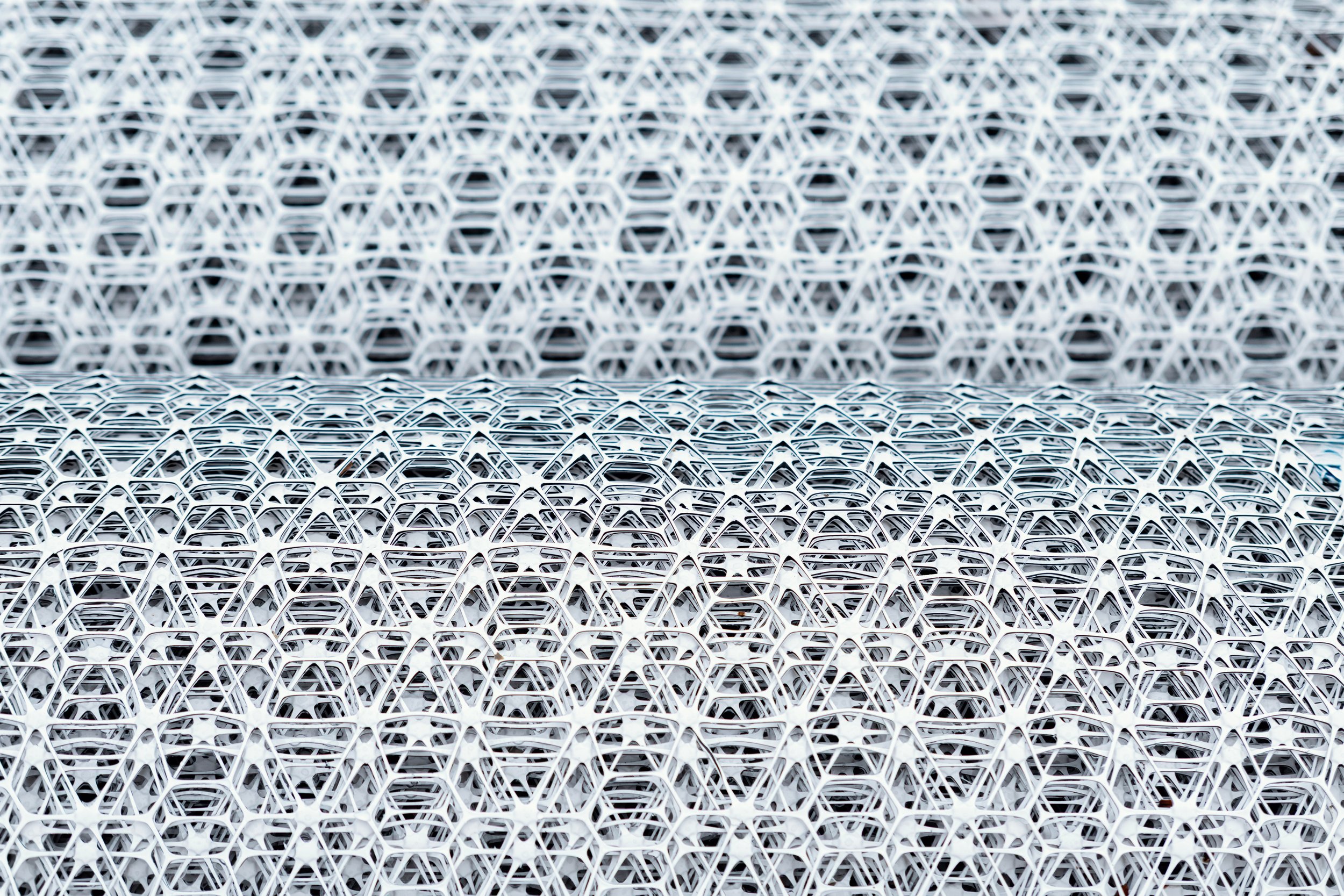
A Tensar geogrid on top of the fabric confines your aggregate. Individual stones interlock through the geogrid apertures, forming a stiff, load-spreading platform. Migration stops. Ruts stop.
With those two layers in place, your fresh aggregate stays fresh aggregate. Not a mud slurry.
Stop Buying the Same Gravel Every Year
One weekend of installing geogrid + geotextile pays for itself in avoided re-gravelling within a season or two.