Soft Earth Solutions — Cleveland, Ohio
Northeast Ohio's heavy glacial clay is the classic soft earth. Every gravel driveway that keeps sinking, every proof roll that fails, every muddy spring — same problem. Geogrid stabilizes it in place, no excavation needed. Same-day pickup in Glenwillow.
Why Cleveland Sits on Soft Earth
Northeast Ohio soil is dominated by dense, water-holding clay left behind by the last glacial retreat. Cuyahoga, Lake, and Geauga counties sit on some of the heaviest clay in the Midwest — the kind that turns to a fluid under load and holds water for months. Most Greater Cleveland residential subgrade hits a soft-earth CBR under 3 during spring thaw and after heavy rain. That's when your gravel migrates, your driveway ruts, and your parking lot cracks.
Adding more gravel doesn't fix soft earth. It just gives you a few months. The soft clay pumps back up between the fresh stones, the two mix, and you're back where you started. The permanent fix is a separator + reinforcement layer at the subgrade interface — before the aggregate goes on.
Two Layers, One Permanent Fix
Woven Geotextile — Mirafi 500X
Rolls out directly on the prepared clay subgrade. The separator. Water passes through, but the wet clay can't pump up into your aggregate above. Essential on Cleveland heavy-clay lots and any site with a CBR under 3.
Mirafi 500X details →Geogrid — Tensar NX650 or NX750
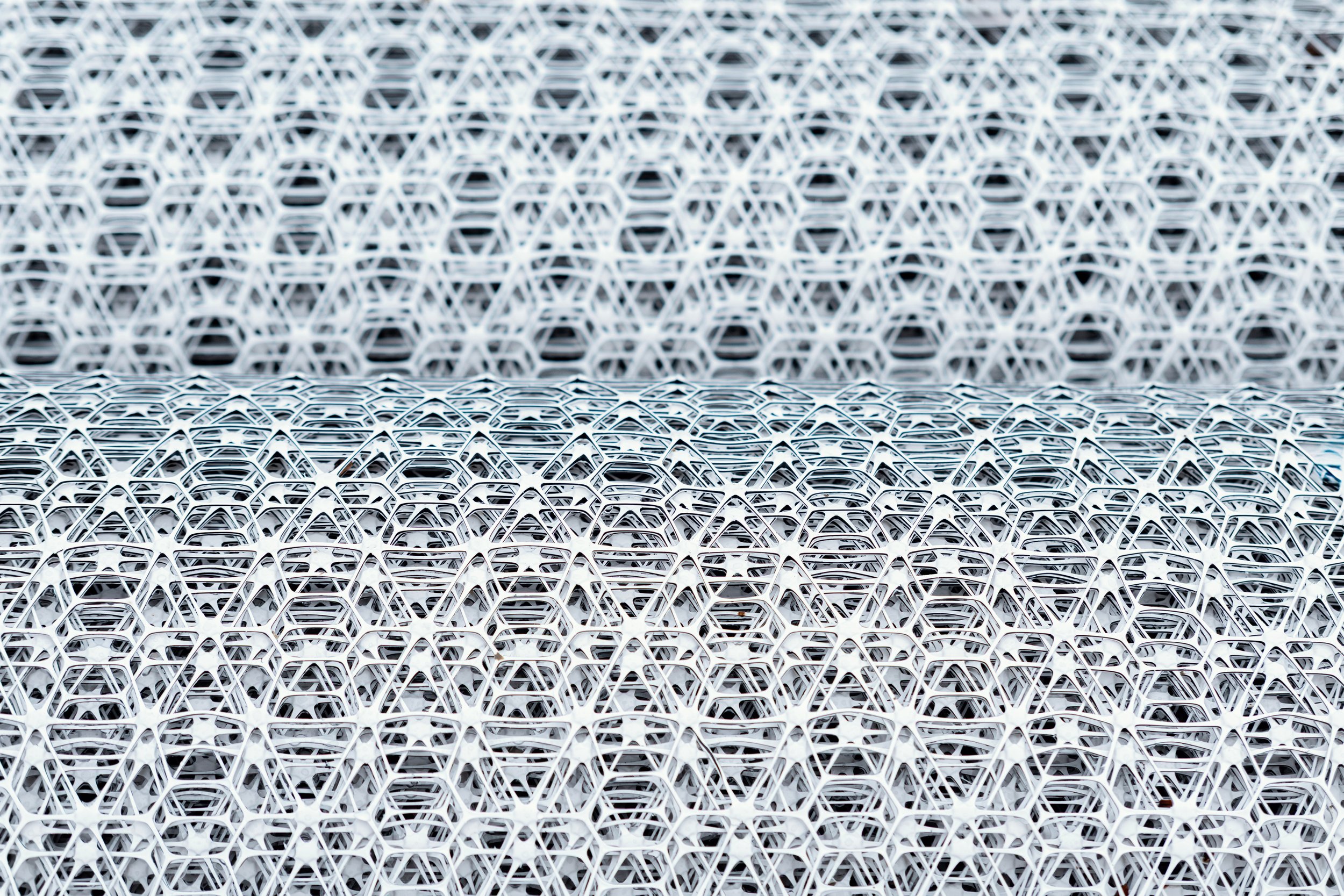
Rolls out on top of the fabric. Aggregate placed above interlocks through the geogrid apertures, forming a stiff mechanically stabilized layer that spreads wheel load across a much wider area of the soft earth beneath.
See geogrid options →Then: 6–10 inches of #57 or #304 aggregate, compacted in lifts. That's the whole system on a residential Cleveland driveway. Two rolls of material, one afternoon of prep, and the soft earth is no longer your problem.
Where We Deliver in Greater Cleveland
Lakewood, Rocky River, Westlake, Bay Village, North Olmsted, Fairview Park
Cleveland Heights, Shaker Heights, University Heights, South Euclid, Beachwood
Parma, Brooklyn, Broadview Heights, North Royalton, Independence, Brecksville
Solon, Chagrin Falls, Bainbridge, Aurora, Twinsburg
Strongsville, Berea, Middleburg Heights, Olmsted Falls
Ohio City, Tremont, Detroit-Shoreway, Old Brooklyn
Warehouse: Glenwillow, OH. Same-day pickup, next-day delivery to most of Greater Cleveland.
Cleveland Soft-Earth FAQ
What is "soft earth" and why is it a Cleveland problem?
Soft earth — also called soft ground or soft soil — is any subgrade that can't reliably carry a load. In Cleveland it's specifically the wet, heavy glacial clay that dominates Cuyahoga, Lake, and Geauga counties. Under wheel loads and construction traffic it ruts, pumps, and squeezes up into whatever aggregate you place on top. Every gravel driveway that "keeps sinking" in Greater Cleveland is a soft-earth problem underneath.
Where in Greater Cleveland is soft earth worst?
East Side and inner suburbs get the worst of it — Cleveland Heights, Shaker Heights, University Heights, Beachwood, South Euclid, and out through the Chagrin Valley — because the underlying till is heavier and holds more water. Southern suburbs (Parma, Broadview Heights, Independence) are close behind. The far West Side (Rocky River, Westlake) is sandier and typically firmer. But every neighborhood has soft-spot pockets, especially where fill was brought in during original development.
Can we fix soft earth without excavating and hauling it off?
Yes — that's the whole point of geogrid mechanical stabilization. Instead of digging out 2–3 feet of soft earth and importing structural fill (expensive, days of hauling), you leave the soft earth in place and build a stiffer platform above it: a woven geotextile at the interface plus a geogrid on top, then aggregate. Load spreads across a much wider area, the soft earth sees lower stress, and it stops pumping. Standard on DOT jobs across Northeast Ohio and increasingly on residential and small commercial.
What material do I need for a Cleveland soft-earth job?
For the heavy clay we typically see in Greater Cleveland: Mirafi 500X woven geotextile at the subgrade interface (stops the clay pumping up), Tensar NX650 or NX750 InterAx geogrid on top (locks the aggregate). For lighter residential loads you can sometimes get away with the geogrid alone. Free DCP testing tells us your actual CBR so we spec the right combination — no guessing.
Do you deliver to my Cleveland neighborhood?
Yes — every neighborhood in Greater Cleveland from our Glenwillow warehouse. Same-day pickup in Glenwillow; next-day delivery to most Cleveland-area addresses including the East Side, West Side, Downtown, and outer suburbs. Call (440) 368-1420 for scheduling or if you need it faster.
How much does a soft-earth fix cost on a residential job?
For a typical 100 × 12 ft residential driveway on soft earth, the geogrid + geotextile material bill runs a few hundred dollars total, plus your aggregate (#57 or #304 from any local pit). That's materially less than what you'd spend re-gravelling every 1–2 years — and this is a build-once fix. Larger commercial and municipal jobs scale up, and the aggregate reduction on those often pays for the geogrid many times over.
Fix It Once, Cleveland.
Free on-site DCP testing across Greater Cleveland. We tell you the CBR, spec the material, and quote the job.